
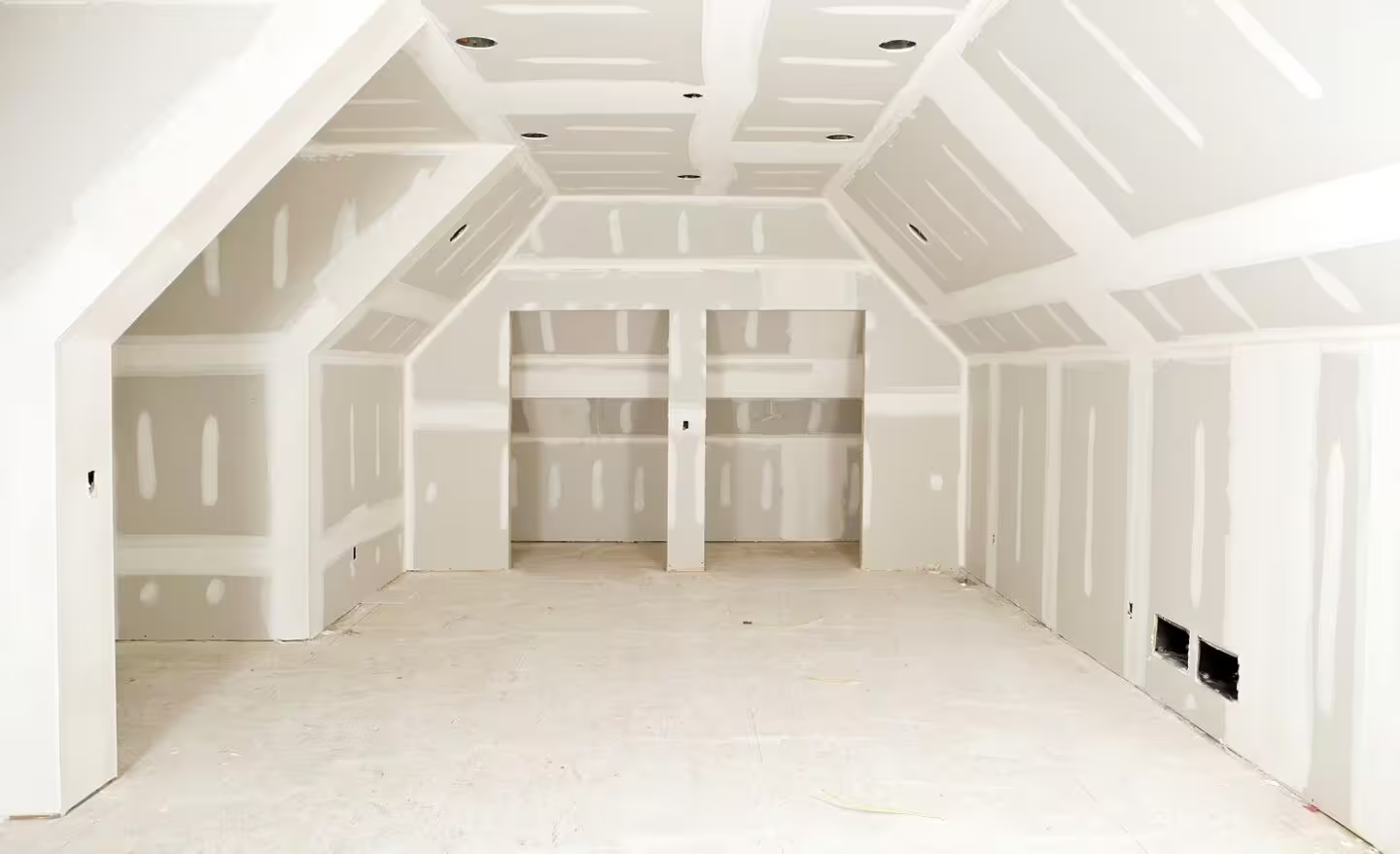
Drywall is tough enough for everyday life, but it’s not indestructible. Furniture bumps, door handles, kids’ play, settling, and even small leaks can leave walls and ceilings looking rough fast.
If you’re debating whether to patch it yourself or call a drywall repair contractor, this guide will help you spot the most common types of damage, understand what they usually mean, and know when it’s time to bring in a pro.
The most common types of drywall damage
1) Nail pops
What it looks like: A small bump (sometimes with a tiny crack) where a nail or screw is pushing outward.
Why it happens: Normal settling, temperature changes, or fasteners that didn’t bite into framing well.
DIY or pro?
- DIY-friendly if it’s just a couple.
- Call a pro if you’re seeing many pops across one wall or ceiling section, or if they keep coming back.
2) Small holes and dents (picture hooks, minor impacts)
What it looks like: Pin holes, small dents, or a dime-sized to golf-ball-sized hole.
DIY or pro?
- DIY-friendly for small holes and dents if you’re patient.
- Call a pro if you need it to blend perfectly (especially on textured walls, glossy paint, or in highly visible areas like hallways and living rooms).
Pro tip: The “patch” is only half the job. Matching texture and paint is where most DIY repairs look obvious.
3) Door handle damage
What it looks like: A puncture or crushed drywall behind a door.
DIY or pro?
- DIY-friendly if the hole is small and the paper isn’t shredded.
- Call a pro if the drywall is crushed, the hole is larger than a fist, or the area feels soft.
Prevent it: Add a door stop. It’s cheaper than repeating the repair.
4) Corner bead cracks and damaged outside corners
What it looks like: Cracks along outside corners, or the corner is chipped and dented.
Why it happens: Corners take a lot of hits—moving furniture, vacuums, kids, pets.
DIY or pro?
- DIY is possible, but corners are tricky to make look sharp again.
- Call a pro if you want crisp lines with no waves, especially if the corner bead is loose or rusting.
5) Seam cracks (tape lines showing or cracking)
What it looks like: A straight crack along a seam, usually 2–4 feet long (or longer).
Why it happens: Minor settling, humidity changes, or poor original taping/mudding.
DIY or pro?
- Call a pro if the crack is recurring, widening, or showing along multiple seams.
- If it’s one short crack, a careful repair can work, but it often needs re-taping, not just spackle.
6) Water damage (stains, bubbling, sagging)
What it looks like: Yellow/brown stains, bubbling paint, soft spots, sagging ceiling drywall.
Important: Drywall repair is the last step. The leak must be fixed first.
DIY or pro?
- Call a pro when water is involved—especially ceilings.
- A contractor can remove damaged sections safely, dry the area properly, and restore the finish so it doesn’t re-stain or crack.
7) Mold concerns
What it looks like: Dark spotting, musty smell, recurring stains, or damage near bathrooms/vents.
DIY or pro?
- Call a pro if you suspect mold. The source moisture issue must be addressed, and the affected materials may need to be removed—not painted over.
8) Large holes and damaged sections
What it looks like: Anything larger than a fist, torn drywall paper, crumbling gypsum, or damage that spans studs.
DIY or pro?
- Call a drywall repair contractor.
Large patches require solid backing, clean seams, multiple coats, sanding control, and careful blending so the wall doesn’t look “patched.”
When a DIY patch usually works
A DIY fix can be fine when:
- The damage is small (nail holes, minor dents, small punctures).
- The drywall is dry and solid (not soft, swollen, or crumbly).
- You’re okay with a “good enough” result in a low-visibility area.
- The wall has a simple texture (or no texture) and flat/matte paint.
When it’s smarter to call a drywall repair contractor
Call a pro if any of these are true:
- Water damage is present (stains, bubbling, sagging, soft drywall).
- The repair is on a ceiling or tall stairwell wall.
- The hole is large or the drywall is crushed.
- You need a perfect blend (smooth finish, matching texture, matching sheen).
- The crack keeps coming back (possible movement or taping issue).
- You want the job done fast with minimal dust and rework.
A good drywall repair should disappear after paint. If you’re worried you’ll see it every time you walk by, it’s usually worth bringing in a pro.
What to expect from a professional drywall repair
A drywall repair contractor typically:
- Cuts back to clean edges (no loose paper or crumbling gypsum).
- Adds backing or ties into framing when needed.
- Applies joint compound in layers (not one thick coat).
- Sands with dust control and keeps edges feathered.
- Matches texture (smooth, orange peel, knockdown, etc.).
- Preps properly so paint blends without flashing.
FAQs
How much does drywall repair usually cost?
It depends on the size, location (ceiling vs wall), and finish. Small patches are often straightforward, but texture matching and ceiling repairs can increase time and cost.
Why can I still see my patch after painting?
Common causes are uneven sanding, edges not feathered enough, mismatched texture, or paint sheen differences. Sometimes a primer coat is needed before the final paint.
Should I paint the whole wall after a drywall repair?
Often, yes—especially with eggshell/satin paint or if the wall gets a lot of light. Painting corner-to-corner helps avoid “flashing” where the repaired spot reflects differently.
How long does a drywall repair take?
Many repairs are completed in one visit, but larger patches (or high-humidity environments) may need extra drying time between coats.
Need a drywall repair contractor in the Mid-Ohio Valley?
If your drywall damage involves water stains, recurring cracks, ceiling issues, or a large patch you want to completely disappear, we can help.
Call Kelly Lang to schedule a walkthrough and get a clear plan for repair and finish so your walls and ceilings look like new again.