
Ice and snow are tough on roofing systems, especially when temperatures bounce above and below freezing. One of the most common winter problems is an ice dam, where melted snow refreezes at the roof edge and creates a barrier. When that happens, water can back up under shingles and end up where it does not belong. If you are concerned about ice dam roof damage signs, here are seven warning signals you should not ignore.
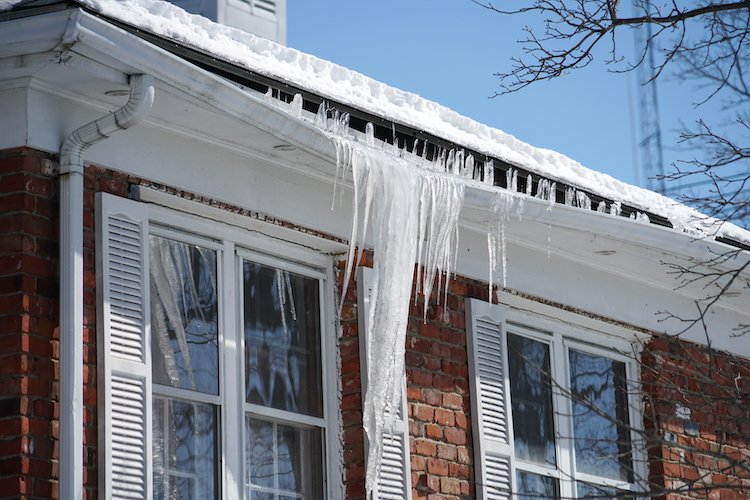
1) Icicles hanging from gutters and roof edges
Icicles can be a sign that snow is melting higher on the roof and refreezing at the edge. That melt and refreeze pattern is one of the first clues an ice dam may be forming.
2) Water stains on ceilings or upper walls
Brown spots, bubbling paint, or faint rings near exterior walls, skylights, or upstairs ceilings can indicate moisture intrusion. Ice dams can push water in strange directions, so leaks do not always show up directly below the problem area.
3) Dripping behind gutters or along the fascia
If you see water dripping from behind the gutter, it may be trapped runoff backing up under shingles or the edge materials. This is one of the more obvious ice dam roof damage signs during thaw cycles.
4) Shingles that look lifted, shifted, or newly damaged
Freeze and thaw cycles can loosen shingles, lift edges, or expose fasteners. Once shingles are compromised, water can work in quickly during the next melt.
5) Gutter seams leaking or gutters pulling away
Ice is heavy. When gutters hold ice and snow, seams can split and hangers can bend. If your gutters are sagging, separating at joints, or pulling away from the house, the system may have been overloaded.
6) A ridge of ice at the roof edge
A visible ridge of ice along the eaves is one of the clearest signs of an ice dam. It usually means meltwater has nowhere to go, so it pools and refreezes repeatedly.
7) Damp insulation or moisture in the attic
If you can safely check your attic, look for damp insulation, frost on nails, or a musty smell. Moisture in the attic can worsen ice dam conditions and can also lead to mold and wood damage.
What to do if you notice these signs
Avoid trying to chip ice off the roof, since it can damage shingles and it is dangerous. Take photos of what you see, keep an eye on any interior staining, and make sure downspouts are clear and draining away from the foundation. If you see active leaking, a heavy ice ridge, or gutters pulling loose, schedule an inspection as soon as possible to prevent more damage during the next thaw.
Winter roof problems can get expensive fast if water reaches wood framing, insulation, or interior finishes. If you are seeing ice dam roof damage signs, a quick inspection can identify the source and help you fix it before the next freeze-thaw cycle makes it worse.