Bowed Basement Walls
Fixing Bowed Basement Walls, Know your options!
If you’ve noticed horizontal cracks or your basement wall starting to lean inward, you could be facing a bowed basement wall — a common sign of underlying foundation settlement for homeowners in West Virginia and Ohio.
A bowed basement wall is one of the most common foundation issues in the Mid-Ohio Valley. They are typically a result of expansive soil pressure against the exterior. When these expansive soils, such as clay, begin to have excessive moisture, they expand. Once the force of the expansion pressure exceeds the amount of vertical and, or lateral strength of the wall, the wall begins to bow, shift, or lean.
Many contractors use the words “fix” and “repair” loosely. Understanding the differences in systems, what they are designed to do, and the pros and cons of each, will help you make an informed decision. We install interior stabilization methods, and exterior repair methods, giving you options.
What Causes a Bowed Basement Wall?
Bowed or leaning foundation walls are typically caused by hydrostatic pressure — the natural force of water and soil pushing against your foundation. When clay-rich soils expand after heavy rain, or when poor drainage and lack of proper basement waterproofing allow water to build up, that pressure can force basement walls to crack, bow, or lean inward over time.
Signs of a Bowed Basement Wall
A bowed wall usually announces itself before it becomes serious. Common signs include:
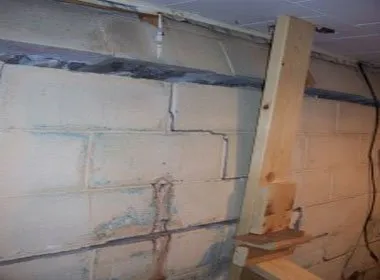
- Horizontal cracks running along the middle of a basement wall
- A wall that curves or leans inward
- Stair-step cracks in block or brick walls
- Gaps where the wall meets the floor or the floor joists
- Sticking doors or windows on the floors above
- New or worsening water seepage
If you notice any of these, it’s worth having the wall measured so you know whether it’s moving.
How Urgent Is Bowed Basement Wall Repair?
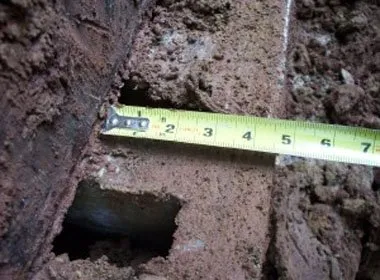
True emergencies are rare, but a bowed wall should be addressed sooner rather than later. The amount of bow determines the timetable. We’ve seen walls bowed in as much as 7 inches that were still standing, but waiting that long isn’t advisable. In most cases a new foundation wall isn’t necessary. We’ve repaired walls that bowed in 3 inches and shifted another 4, as long as they were still standing. There is a point where repair becomes cost prohibitive, and if we reach it, we’ll tell you what we’d recommend instead.
Why You Shouldn’t Just Patch the Cracks
Some cracks are typical and don’t need repair before patching. Cracks that do warrant repair shouldn’t be patched first, because patch material is incompressible and limits how much the wall can be straightened or lifted afterward. See more in our Foundation Repair FAQ.
MYTH ALERT: There is an interior method to straighten your bowed basement wall.
Interior systems are not “fixes.” They are designed and installed as stabilization. Their sole function is to keep a bowed basement wall from moving further. They are good at what they are designed for, but they are not a be all fix all.
We know that the wall is moving due to expansive soils. How then can we expect to “fix” it without removing the cause of the movement? Eliminating the cause, the soil and the excessive moisture, is the only fix.
Not all customers, need or want an exterior system installed. That is why we fully educate all of our customers on the distinctions between all systems on the market. We do not enslave ourselves to a franchise, so we have the ability to install both exterior and interior systems, and the flexibility to be honest on what each one will accomplish.
Need help with your basement walls?
How Kelly Lang Contractors Fixes Bowed Walls
Our team specializes in permanent foundation wall stabilization solutions. Depending on your situation, we may install carbon fiber straps, steel I-beams, or wall anchors to reinforce your basement and prevent further movement. Every repair starts with a detailed inspection to determine the right fix for your home.
- Structural evaluation and foundation measurement
- Custom repair design using proven stabilization systems
- Installation of carbon fiber, I-beams, or anchor systems
- Optional waterproofing to reduce soil pressure long-term
What to Expect From a Bowed Basement Wall Inspection
Every repair starts with a conversation and a close look at the wall. We measure how far it has bowed, look for the cause, such as soil conditions or drainage, and explain which options fit your situation, including the pros and cons of interior and exterior systems. You’ll get a firm quote with no add-ons unless you approve them, and you don’t have to leave your home while the work is done.
Why Homeowners Choose Kelly Lang Contractors
We’re a locally owned foundation repair company serving the Mid-Ohio Valley and surrounding areas. Unlike national franchises, we offer honest recommendations and install both interior and exterior foundation systems so you get the solution that truly fits your home’s needs.
How do you fix a bowed basement wall?
Most bowed walls can be stabilized using carbon fiber straps, steel I-beams, or wall anchors. These systems prevent further inward movement and restore structural strength without a full wall replacement.
Can a bowed wall be repaired without digging outside?
Yes. Interior systems like carbon fiber or steel beams can often be installed from inside your basement, making the repair clean, fast, and minimally invasive.
When should I call a professional?
If cracks are wider than 1/4 inch or your wall is visibly leaning inward, schedule an inspection immediately. Early repairs are far more affordable and prevent long-term foundation damage.